Is “Sustainable Development” Changing Our Town, Shaping Our Region?

Updated: Aug 15, 2025
By Mary Baker, Published on July 16, 2025
Across America—and right here in Yavapai County—communities are being asked to adopt planning strategies called Sustainable Development or Vision Zero. They’re often presented as common-sense solutions for housing, traffic, and the environment.
Prescott’s 2025 General Plan Update and Yavapai County’s Vision 2030 planning framework are filled with carefully chosen buzzwords and policy goals rooted in an ideology that contradicts American values. Phrases like “sustainable development,” “climate adaptation,” “social equity,” and “wildlife corridors” don’t just appear out of thin air. They are drawn from globalist documents—like the Earth Charter, Agenda 2030, and the UN’s Sustainable Development Goals—and reflect a worldview that sees people as the problem, not the solution.
This ideology treats humanity as a burden on the planet, not as stewards of it. It demands top-down control over private land use, transportation, water access, and even the types of homes people are “allowed” to live in—all in the name of sustainability.
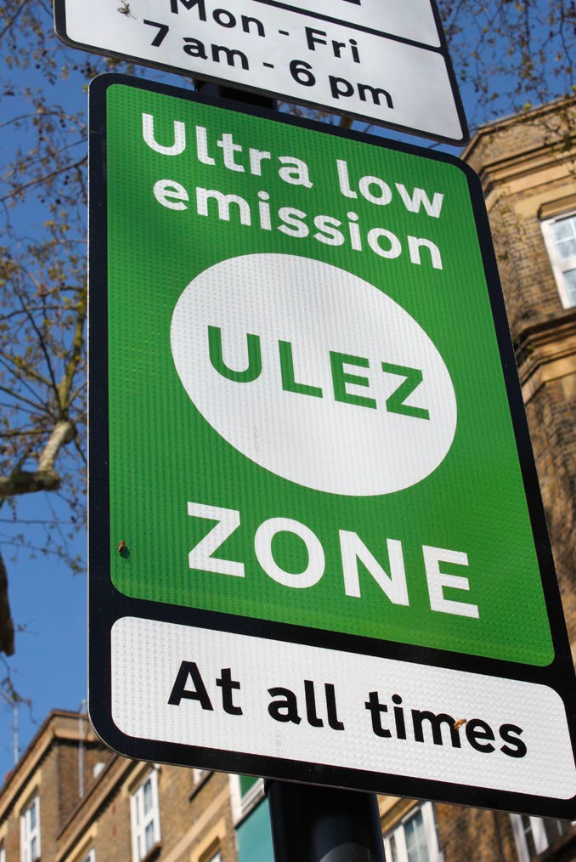
But what’s really happening?
Private property rights are being undermined. New zoning overlays, conservation easements, and “climate-resilient” development zones are quietly restricting what owners can do with their own land.
Transportation plans push Vision Zero—a European-style control strategy that limits personal vehicle use in favor of a tightly controlled, compact urban environment modeled after the "15-minute city" concept.
Natural resource use is being regulated through climate models rather than real data from local ranchers, farmers, and foresters who’ve worked the land for generations.
So-called public engagement forums are often scripted and funded by consultants whose ideology aligns more with the World Health Organization than the U.S. Constitution.
These planning models trace back to global policies first introduced at the 1992 United Nations Earth Summit. Since then, they’ve been promoted through federal grants, national planning groups, and regional partnerships, not always with input from residents.
The justification? A “planetary crisis” that requires centralized management of how we build, eat, travel, and think.
The assumption? Individual freedom must be reined in to protect the planet.
The strategy? Behavior-change through policy.
The result? Small towns like Prescott are being guided toward policies that:
Prioritize high-density, mixed-use development over traditional neighborhoods
Push for reduced car use in favor of centralized transportation
Limit land use based on climate goals and conservation targets
Introduce vague terms like “equity,” “resilience,” and “livability” that sound nice—but often mask restrictive regulations
The public rarely hears this directly. Instead, we’re fed carefully crafted terms—what George Orwell might’ve called “newspeak”—designed to soften resistance and discourage scrutiny.
Here are just a few examples of what sustainable development really means:
Social Justice - Policies that push equity of outcome, often through top-down mandates on housing, zoning, and public services.
Environmental Justice - The idea that land must be “shared” through regulation, not privately owned or freely managed.
Economic Justice - Redistribution of resources, not creation of wealth or economic mobility.
You’ll also hear terms like “resilience,” “livability,” “smart growth,” and “inclusive communities.” These aren’t neutral. They are value-laden concepts with global origins, now used to shape local laws.
Take this quote from UN planner Maurice Strong:
Current lifestyles and consumption patterns of the affluent middle class…are not sustainable. A shift is necessary toward lifestyles less geared to environmentally damaging consumption.
These plans may appear grassroots, but they often follow a predefined template used across the country. Local leaders are encouraged to adopt these models in the name of progress or responsibility for future generations, while the real costs—property rights, housing choice, and self-governance—go unnoticed.

Residents have every right to ask:
Who created this vision?
What will it cost future generations?
Does it reflect the will of our community—or someone else’s agenda?
Sustainable development shouldn’t mean surrendering local control. Let’s ensure our planning decisions are based on what works for us, not what’s handed down from a global playbook.
Coming Next in the Civic Awareness Series:
In our next installment, The Rise of Smart Growth: What It Is and Where It Came From, we’ll take a closer look at the origins of the Smart Growth movement and how it connects to the policies and planning trends often described as sustainable development. You’ll learn how Smart Growth concepts—like higher-density zoning, mixed-use corridors, and regional land-use controls—emerged, who promoted them, and why they’re reshaping communities across the country. Whether you’re a homeowner, a business owner, or simply a concerned citizen, this article will help you understand the philosophy behind Smart Growth and how it influences the future of your town.
RESOURCES
(Draft Proposal dated March 25, 2025.
Adoption Failed.)
TERMS & BUZZ WORDS
Sustainable Development
Climate Adaptation
Social Equity
Wildlife Corridors
High Density, Mixed Use
Equity
Resilience
Livability
Social Justice
Environmental Justice
Economic Justice
Street Calming
Transit Oriented
Smart Growth
Inclusive Communities
Click HERE to access Mary’s
Glossary of Terms.
This glossary is provided for
informational and educational
purposes only. No part may be
reproduced, distributed, or transmitted without
prior written permission.
Contact: marytbaker@proton.me