Rewilding the West: The Long March to Control Land and Liberty

Updated: Nov 20, 2025
By Mary Baker, Published on November 19, 2025
Prescott, AZ—
The Battle for Land in the West
The battle over land use in the American West is no longer theoretical—it is being executed through conservation easements, federal grant programs like the USDA’s Regional Conservation Partnership Program (RCPP), and executive orders like Biden’s E.O. 14008, America the Beautiful. With $20 billion earmarked in the Inflation Reduction Act (IRA) for climate-oriented conservation, the administration’s 30x30 agenda intended to “conserve” 30% of U.S. lands and waters by 2030 found fertile ground. Although framed as “locally led” and “voluntary,” the real engine behind this effort is a mix of federal funding, climate policy mandates, and global conservation goals rooted in the United Nations Convention on Biological Diversity and the Agenda 2030 Sustainable Development Goals. These initiatives prioritize ecosystem protection, carbon sequestration, and “climate resilience” over economic use and individual ownership.
Across America—and especially in rural counties like Yavapai, Arizona—a silent revolution in land use is unfolding. For decades, planners have promoted Smart Growth as a strategy to curb urban sprawl and concentrate development in dense population centers. But behind this carefully marketed agenda is a more sweeping and insidious companion agenda: Rewilding. Together, these twin engines of centralized control—Smart Growth and Rewilding—operate behind the curtain of climate policy and conservation rhetoric. One corrals people into controlled, compact cities under the guise of efficiency, while the other empties the countryside of human use, returning vast swaths of land to wilderness. Though marketed separately, these two agendas are working hand in hand to centralize control, dismantle private property, and redraw the boundaries of human freedom.

The Rewilding the American West campaign, launched in tandem with IRA funding, envisions turning millions of acres of western land into connected wildlife corridors eliminating grazing, mining, timber, and recreation to prioritize predators like wolves and keystone species like beavers. This effort builds on earlier initiatives such as the Wildlands Project and the Sagebrush Sea Network, now cloaked in the language of climate resilience and biodiversity.
Even as the 2025 Trump administration pauses or reviews many of these grants, including portions of the RCPP, the bureaucratic and NGO network driving re-wilding remains active. The Nature Conservancy and similar groups act as proxies for federal control, imposing permanent land-use restrictions through easements that bind both current and future owners. These easements function as tools of soft expropriation allowing agencies and NGOs to direct land use without public criticism or by outright purchase. The promise of technical assistance and compensation may appeal to landowners facing drought, regulation, or generational transitions, but the long-term cost is the erosion of property rights and local governance.
Recent Congressional action under the Congressional Review Act - H.J. Res. 104, 105, and 106, which overturned Bureau of Land Management plans in Montana, North Dakota, and Alaska, underscores how deeply bureaucratic power shapes land-use decisions. Even when Congress intervenes, the administrative and NGO systems behind federal land control remain largely untouched, illustrating how entrenched these mechanisms have become within land-use governance.
Timeline: How Did We Get Here?
The idea of rewilding and the loss of local control over land is not new. It is the result of three decades of coordinated policy:
1991 – The Wildlands Project launches with a vision of turning North America into “an archipelago of human-inhabited islands surrounded by natural areas.”
1992 – President George H.W. Bush signs the U.N. Convention on Biological Diversity, initiating U.S. participation in global ecosystem protection efforts.
1993 – President Bill Clinton’s E.O. 12852 establishes the President’s Council on Sustainable Development to fulfill the biodiversity and climate goals of the 1992 Earth Summit. See Civic Awareness Series, Vol. 1, No. 2
2012 – President Obama’s E.O. 13575 creates the White House Rural Council to integrate climate and conservation planning into rural policy.
2019 – The Wildlife Corridors Conservation Act introduces federal plans to connect habitats across the West, though it fails to pass Congress.
2021 – President Biden issues E.O. 14008 and launches the America the Beautiful plan to conserve 30% of U.S. lands and waters by 2030.
These actions are not isolated. They reflect a long-term shift toward centralized environmental planning, where private land is seen not as a resource to be stewarded by its owner, but as a piece in a continental puzzle managed by technocrats and conservation scientists.

The Arizona Dilemma
Arizona’s landownership situation makes it especially vulnerable:
Less than 13% of the state is privately held.
The rest is controlled by federal agencies (BLM, Forest Service), Tribal nations, the military, and the Arizona State Land Trust.
90 wilderness areas spanning 4.5 million acres already limit or prohibit economic use.
Only 16% of the state generates tax revenue to fund essential services like education, infrastructure, and law enforcement.
The federal PILT program (Payment in Lieu of Taxes) doesn’t come close to replacing lost revenue on non-taxable federal lands.
In Gila County, for example, just 3% of land is privately owned, with 1.5% used for mining.
Land swaps often benefit urban centers like Maricopa County at the expense of rural economies.
In this context, every acre lost to a conservation easement further weakens Arizona’s already fragile private land base and transfers power to remote agencies with no accountability to local communities.
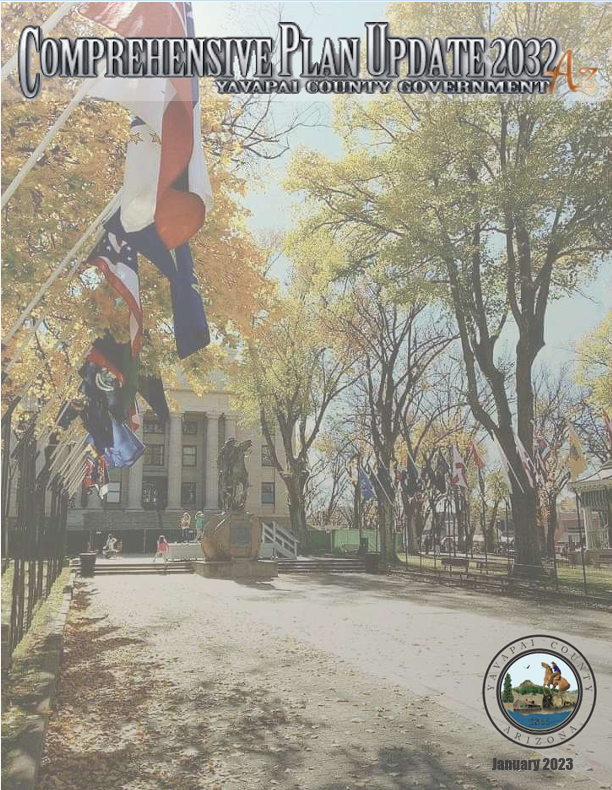
Yavapai County Land Conservation by Zoning
Yavapai County’s comprehensive zoning update, slated for completion by 2027, represents a major reorganization of how land development, conservation, and housing policy intersect at the county level. The revisions are intended to align local ordinances with the county’s 2032 Comprehensive Plan, a framework emphasizing sustainable growth, environmental protection, and diversified housing options. Environmental planning firm Logan Simpson is leading the effort, focusing on consolidating zoning categories, encouraging mixed-use and clustered development, and embedding standards for water conservation and open-space preservation.
While framed as modernization and efficiency, the process also reflects a broader institutional shift in land governance. The Comprehensive Plan itself was developed in collaboration with organizations such as The Nature Conservancy, whose conservation-based land management philosophy often promotes centralized environmental planning and permanent open-space protections. As these frameworks are translated into local zoning codes, decision-making authority tends to move away from elected officials toward planning staff and contracted technical experts — a transition that may streamline processes but also reduce direct public accountability.
Experts may note that such zoning reforms, though justified through goals like affordability and sustainability, often embed long-term constraints on rural development and private land use. By prioritizing clustering, density, and open-space preservation, the County may effectively codify a land-use model that privileges ecological management objectives over individual property flexibility. The zoning update that is currently in process illustrates how contemporary conservation principles are being operationalized within local government structures — reshaping traditional notions of ownership, stewardship, and local control across the rural West.
The True Cost of “Voluntary” Conservation
Public-land grazing and conservation programs are often framed as partnerships between private landowners and public managers, meant to preserve open space and habitat. Yet beneath this cooperative language lies a gradual transfer of discretion from individuals to regulatory frameworks.
By linking land use to easements, grazing permits, and NGO oversight, private property becomes subject to environmental management objectives that can shift with policy trends, redefining ownership as conditional rather than absolute.
Private property rights have long anchored American liberty. Supporters of conservation easements describe them as “voluntary” tools to help landowners monetize property without selling it outright, but once bound by a perpetual easement, a property’s future use is forever constrained not only by today’s rules, but by future reinterpretations of “sustainability” or “climate-smart” standards. The more counties and landowners adopt such models, the more participation becomes expected, blurring the line between choice and compliance.

Importantly, discretion in land management does not mean neglect. Many ranchers and landowners are exceptional stewards whose cattle and rangelands flourish under time-tested regenerative grazing practices that naturally rebuild soil health, water retention, and biodiversity. Their success demonstrates that environmental care can arise from knowledge, incentive, and tradition—not regulation.
Property Rights and Human Liberty
This is not just a policy issue; it is a philosophical one. The American experiment is built on the belief that private property is the foundation of personal liberty, prosperity, and civic independence. As John Locke observed, property rights are natural rights, grounded in the right of every person to enjoy the fruits of their labor. Today, property rights are being eroded not through eminent domain or armed force but through the slow creep of bureaucratic conservation policy.
What Can Be Done?
The first step for communities under threat: educate local leaders about the twin engines of Smart Growth and Rewilding the West that operate behind the curtain of climate policy and conservation rhetoric, reject 30x30 resolutions, and expose how these policies erode private property rights under the banner of conservation.
There is no single solution, but several steps are clear:
Local officials must stop rubber-stamping conservation funding without full public review, and an analysis and disclosure of long-term consequences.
Counties should assess the fiscal impact of conservation easements on tax revenue, emergency services, and land use planning.
State legislatures can strengthen private-property protections by enacting statutes that require conservation easements to be created with full transparency, public‐approval processes, and—with new instruments—such as time-limited rather than perpetual durations. See link to Arizona Revised Statutes §33272 (as amended by Arizona Senate Bill 1549 in 2025).
Landowners need alternatives to monetizing their property—such as working with our LD-1 representatives to explore transferring federal land management authority to state custodianship or developing market-based leasing models that maintain local control without creating permanent encumbrances while keeping in mind the agreement that public lands remain “Lands of Many Uses” and not “Lands of No Usage.”
Public awareness must grow. Citizens must understand that what is framed as “helping the environment” is often a coordinated effort to reshape society and remove land from productive use. Share this civic awareness series with your circle of friends and neighbors.
Conclusion: The Land Is Liberty
In the final analysis, this is about more than land. It is about who decides how land is used—local people, or distant planners. It is about whether a generational rancher in Yavapai County retains the right to adapt and thrive or becomes a caretaker of land they no longer control.
The West was built by people who understood the value of property, not just as capital, but as freedom. If we allow rewilding agendas to continue unchecked, we risk turning the last bastion of American independence into a fenced-off museum of what once was.
It’s time to ask hard questions and stand firmly for the principle that private property is not the enemy of conservation, it is its strongest foundation.
RESOURCES
TERMS & BUZZ WORDS
Sustainable Development
Alternative Housing
Biodiversity
Brownfield Remediation
Carbon Footprints
Carbon Neutral Urbanism
Carbon Reduction Goals
Climate Action Plans
Climate Adaptation
Climate Resilience
Community Visioning
Compact Living
Economic Justice
Environmental Justice
Equity
Gender Diversity
Green New Deal
Green Space
High Density, Mixed Use
Inclusive Communities
Infill Development
Livability
Managed Consensus
Mixed-Use Development
Model Legislation
Resilience
Smart GrowthSocial Engineering
Social Justice
Street Calming
Sustainable Development
Transit Oriented Development
Transportation/Mobility Equity
Underserved Communities
Urban Green Infrastructure
Urban Sprawl
Urgency
Valuing Community Character
Walkable Urbanism
Whole of Government
Wilderness Designation
Wildlife Corridors
Click HERE to access Mary’s
Glossary of Terms.
This glossary is provided for
informational and educational
purposes only. No part may be
reproduced, distributed, or transmitted without
prior written permission.
Contact: marytbaker@proton.me